Bought by the piece. Sold by the gram.
Why do jewelers pay so little when you sell gold jewelry back?
The carving, the craft and the shop’s margin are all in the price you pay. None of them are in the price you get.
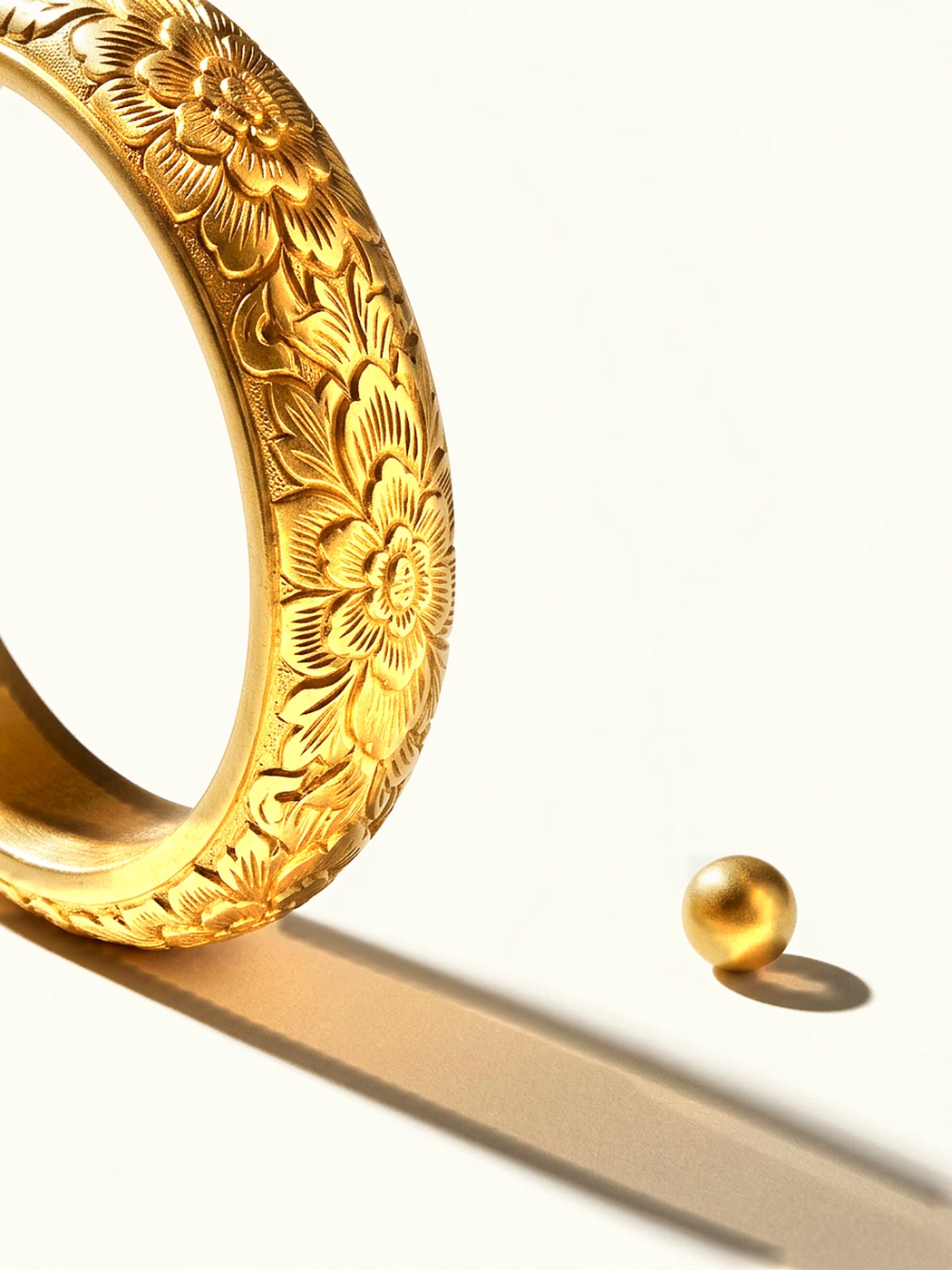
- 1The carving: Paid in. Hours of handwork, the brand, the shop’s margin. Sold back: worth nothing.
- 2The gold: 11.7 g. The only part a buyer pays for, less a discount.
- 3The rest of the metal: 8.3 g. Other metals mixed in. Paid for: nothing.
Look at the two objects. On the left, a bangle covered in carved flowers. On the right, a small bead of gold. They are the same thing, before and after a buyer gets hold of it.
Two prices, two units
When you buy jewelry, you pay by the piece. The price includes the gold, the design, the hours of carving, the brand, the rent on a shop in a good street, and the shop’s margin.
When you sell it, you are paid by the gram. A buyer weighs it, tests the purity, multiplies by the gold price, then takes a discount. The carving that made you choose that bangle earns nothing. Neither does the brand.
The purity cut
Most jewelry is not pure gold. Fourteen-karat gold is 58.3% gold; ten-karat is 41.7%. The buyer pays only for the gold content, so a 20-gram 14k bracelet is really about 11.7 grams of gold.
Then comes the discount. Buyers need a margin too, so their offer sits below the melt value of the metal. How far below depends on who you sell to, which is why two shops can quote very different numbers for the same piece.
What the price hides
None of this is a scam. It is two different businesses: one sells objects, one buys metal. The hidden cost is the distance between them, and you only see it when you try to cross it.
Wear what you love. Just do not file it under savings.
The strongest objection
“Jewelry is meant to be worn and loved, not traded. Nobody buys a bangle as an investment.”
Agreed, and that is the whole point. The trouble starts when a seller calls it one. If jewelry is described as “gold that holds its value,” it is fair to show what value it holds: the metal, by weight, minus the buyer’s discount.
Think we got it wrong? Argue with us. The best replies shape future issues.
Sources
- Karat fineness: 24k = 99.9%, 18k = 75%, 14k = 58.3%, 10k = 41.7%
- Buyback pricing is set by each buyer; quotes vary and are typically below spot melt value
Not investment advice. Prices are sampled on the dates shown and will have moved.